
“`html
Telling Stories with Photos: A Comprehensive Guide
Photography is more than just capturing images; it’s about narrating a story through visuals. In this comprehensive guide, we delve into the art of visual storytelling, exploring techniques, examples, and the fundamentals that form the backbone of a compelling story. From planning your shots and invoking emotions to using colors creatively, our guide offers insights for photographers at all levels. We also explore how different genres, such as wedding and corporate photography, integrate storytelling elements to convey meaning. Finally, we provide useful tips and a step-by-step guide to craft impactful storytelling photographs. Whether you’re a seasoned photographer or just starting, this article will help you leverage your photos to create memorable narratives that engage and resonate with your audience.
How To Create Photos To Tell An Effective Visual Story
Creating an effective visual story begins with understanding the narrative you want to convey. A strong story has a clear theme, subject, and emotional undertone. Before you even pick up your camera, take the time to plan your shots thoughtfully. Consider what emotions or messages you want to evoke from your audience.
Once you have a narrative in mind, focus on capturing the moments that best represent this story. Lighting, composition, and perspective play vital roles in how your story will unfold. Ensure that each element in your photo supports the story you’re telling. Whether it’s the candid expressions of people or the interplay of shadows and light, every decision should serve the narrative purpose.
Techniques in Telling Visual Stories
Visual storytelling techniques vary from one photographer to another, but certain methods are universally effective. One technique is to use a sequence of images to convey a storyline or progression of events. This can involve a series of photographs taken over time or a collection showcasing different perspectives around the same subject.
Artistic Visual Storytelling Example
For instance, photographing a market can start with wide shots of the bustling activity and narrow down into intimate close-ups of interactions. Artistic elements such as color contrast or creative use of depth of field can also enhance the storytelling aspect by drawing attention to the key elements of your narrative.
The Art of Storytelling in Photography
The art of storytelling in photography goes beyond capturing beautiful images. It’s about infusing these images with emotional and intellectual depth. Photos should not only be visually appealing but also have the power to linger in the viewer’s mind and provoke thought.
“Pretty pictures without emotional or intellectual substance are great to look at, but they’re also easily forgettable”
This statement underscores the importance of creating photographs that have both aesthetic appeal and a deeper meaning. To achieve this, concentrate on the story you want to tell and ensure every element within your photo contributes to this narrative.
A note for Beginner Photographers
For beginners, focusing on storytelling might seem daunting. However, it starts with observing your surroundings, understanding what fascinates you, and trying to convey that through your images. Practicing storytelling in everyday photography is an excellent way to develop this skill.
Event Photographers in Sydney
Event photographers in Sydney often center their work around storytelling. Whether it’s capturing the joy of a wedding or the grandeur of a corporate event, the story told through photos can be just as significant as the event itself. As such, photographers must focus on emotions, candid moments, and the overall atmosphere to provide a rich narrative through their lens.
The Fundamentals of Storytelling in Photography
List of the 6 most important Fundamentals of Storytelling
The fundamentals of storytelling in photography are essential for creating compelling images. These elements help structure your narrative and bring depth to your work. Below, we discuss each of these fundamentals and how to effectively incorporate them into your photography.
1. Plan Your Shots Beforehand
Planning your shots is crucial for effective storytelling. Decide on the message or emotion you want to convey and compose your shots accordingly. Pre-planning can help you make the most of the scene and ensure each photograph aligns with your overarching narrative.
2. Invoke Strong Emotions
Photos that evoke emotion resonate with viewers on a personal level. Whether it’s joy, sadness, surprise, or awe, capturing genuine emotions in your subjects will create a more powerful story. This can be achieved through expressive facial expressions, dynamic movement, or even atmospheric lighting.
3. Be Original
Originality sets your story apart from others. Find unique perspectives or stories that haven’t been told before, or present familiar subjects in new and interesting ways. This originality can give your photographs a signature style that is both intriguing and unmistakable.
5. Use Narrative Structures
Using narrative structures like beginning, middle, and end can help your story feel complete. This might involve showing a sequence of events or creating a journey within a single photo. Understanding these structures can guide you in capturing the essence of your story in a cohesive manner.
6. Decide Which Method To Use
Selecting the right method or approach to storytelling will largely depend on your subject and the desired outcome. Whether it’s documentary style, portraiture, or conceptual photography, choose the technique that best aligns with the story you’re aiming to convey.
Simple Message in this ‘Fine Art Photo’
Fine art photography often relies on simplicity to tell a story. Stripped of distracting details, these images focus on the core message or emotion the artist wants to express. Contrast, color, and composition play significant roles, while the subject itself is usually kept minimal and impactful.
Start Here to Get a Free Quote
If you’re looking to commission fine art photography or want to learn more about how your project can come to life through photos, starting with a free quote can outline your vision and clarify requirements. Professional photographers can guide you from concept development to final production, ensuring your story is told exactly how you envision it.
9 Useful Tips on How to Do Storytelling With Your Images
List of 9 tips on how to do Storytelling with your photos
Understanding and using these tips can elevate your photographic storytelling prowess. These guidelines will help hone your skills and develop your unique storytelling style through images.
1 – It’s All About The Details
The devil is in the details, and in photography, these small elements can significantly enhance your storytelling. Look for tiny details that add to the narrative or reveal something about your subject’s character or the situation captured.
2 – Use the Entire Frame to Your Advantage
The entire frame of your photograph is your storytelling canvas. Use it wisely by balancing your elements and directing the viewer’s attention to the most important aspects of your story. Avoid any parts of the frame that might detract from your narrative.
3 – Don’t Overlook the Basics
The basics of photography, like composition, lighting, and focus, should never be overlooked when telling a story through your images. Mastering these basics ensures that the technical quality of your photos supports, rather than detracts from, the story you’re trying to tell.
4 – Don’t Post Everything
Selectivity is vital in storytelling. Not every photo you take needs to be part of your narrative. Choose only the images that best convey your story and hold the greatest emotional or informative weight.
5 – Reduce Visual Distractions
Less is often more when it comes to storytelling through photos. Reducing distractions in your frame, such as cluttered backgrounds or unnecessary elements, can help focus attention on the main story you wish to convey.
6 – Pay Attention to Your Compositions
Composition is key to storytelling photography. From leading lines to the rule of thirds, use compositional techniques to guide the viewer’s eye and reinforce your narrative.
7 – Use Colours Creatively
Colors can convey emotions and set the tone of a photograph. Experiment with different color palettes and contrasts to enhance your storytelling. Warm colors might convey comfort or happiness, while cooler tones might suggest calmness or melancholy.
8 – Be Open to Learning From Others
Observing and learning from other photographers can provide new insights and techniques for storytelling. Whether through attending workshops, following photography blogs, or participating in photo critiques, embracing continuous learning will keep your skills and creativity sharp.
9 – Focus on a Single Theme
Staying focused on a single theme can make your story more powerful and easier to follow. Decide on a central idea or emotion, and ensure every aspect of your photo supports this concept. This focus will help your audience resonate more deeply with your images.
What’s the story behind this photo?
Every photo has a story, whether simple or complex. Reflecting on the story behind your photographs can inspire deeper connections and interpretations. When you share these, ask yourself and your audience—what is the story telling us, and what emotions does it evoke?
Good storytelling photos will make you stop and think.
Does this creative photo make you think? What’s your first impression?
Creative photos challenge our perceptions and often invoke curiosity or introspection. When encountering such photos, it’s vital to question our first impressions and delve deeper into understanding the narratives portrayed by the artist.
Event Photography Storytelling
Wedding Story Examples
Weddings are events rich with emotion, making them perfect subjects for storytelling. Capturing small, poignant moments like a shared glance between the couple or a laugh during a toast can tell the story of the day with depth and sincerity.
Corporate Event Photography
Storytelling in corporate event photography often involves capturing the essence of the event’s purpose. This could be the energy of a product launch, the decor demonstrating a brand’s style, or the interactions during a networking session, all contributing to the corporate narrative.
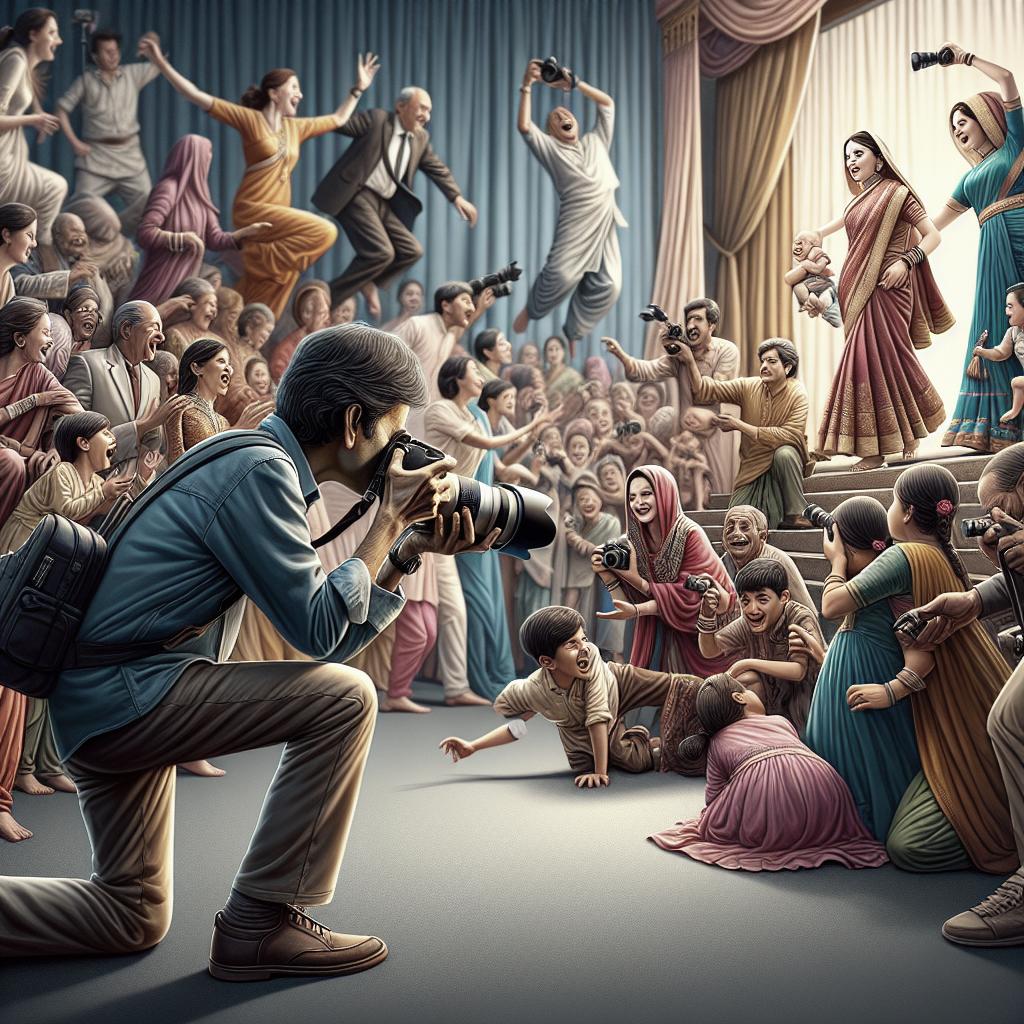
Many stories can be told about this photo of a stage performance
Stage photographs are vibrant with potential for storytelling. Each performance can tell multiple stories—those of the performers, the script, and the audience’s reaction. The context around a stage photo can reveal insights into culture, emotion, and artistic expression.
The real story isn’t as important as your interpretation of the story
Interpretation allows for multiple narratives from a single image, enriching the experience and engagement with photography. The photographer’s perspective might be just one of many ways to perceive a story, making audience interaction a vital component of storytelling photography.
Step-by-step Guide: Craft A Compelling Storytelling Photograph
1. Make a Plan
Begin with a detailed plan. Know the message you want your photo to convey and identify the key elements you need to capture. A well-thought-out plan can guide your creative process and decision-making.
2. Prepare A Story Structure
Similar to writing, a photo story should have a structure. Visualizing this can help in understanding which scenes or subjects are most essential. The structure will serve as a roadmap for capturing the necessary shots.
3. Think About Context
The context in which a photo is taken can greatly influence its story. Consider the broader story that the location, timing, and culture bring to your image. Attention to context helps build a richer and more engaging narrative.
4. Framing is Key
How you frame your shot can affect the viewer’s perception. Use framing to emphasize the main subjects of your story, guide the viewer’s focus, and eliminate unnecessary distractions. Framing can highlight the connections or contrasts within your narrative.
Final Words
Successful storytelling in photography requires practice and intention. Focus on your message, remain open to different perspectives, and use visual elements to enrich your stories.
“Share your message with visual stories”
Staff & Corporate Headshot Photography
Headshot photography can tell stories about professionalism, personality, and brand essence. Through careful composition and attention to detail, headshots can convey confidence and approachability, essential for personal and corporate branding.
Corporate Event Photographers in Sydney
In Sydney, corporate event photographers are adept at capturing the nuances of professional gatherings. By focusing on details like speaker highlights, networking moments, and contextual venue shots, they create vivid stories that represent the company’s image and culture.
Architectural Photographers Sydney
Architectural photography in Sydney is a testament to the city’s dynamic structures and cultural heritage. Photographers specializing in this genre can convey unique stories about a location’s history, usage, and aesthetic values through their lens.
Event Video Production Services Sydney
Video production services in Sydney extend storytelling beyond still images. Through dynamic visuals and sound, videography can capture the full atmosphere, emotion, and pace of events, providing an immersive storytelling experience.
| Section | Content Summary |
|---|---|
| How To Create Photos To Tell An Effective Visual Story | Discusses the importance of planning and capturing elements that support a narrative. |
| Techniques in Telling Visual Stories | Explores methods like image sequences and artistic elements to enhance storytelling. |
| The Art of Storytelling in Photography | Covers the importance of emotional depth and includes guidance for beginners. |
| The Fundamentals of Storytelling in Photography | Outlines key storytelling fundamentals such as planning, emotions, and originality. |
| Simple Message in this ‘Fine Art Photo’ | Highlights the power of simplicity and the significance of fine art photography. |
| 9 Useful Tips on How to Do Storytelling With Your Images | Provides practical tips like focusing on details and reducing distractions. |
| What’s the story behind this photo? | Encourages reflection and deeper connections through interpretation. |
| Event Photography Storytelling | Examines storytelling in weddings and corporate events. |
| Step-by-step Guide: Craft A Compelling Storytelling Photograph | Offers a step-by-step approach to creating effective storytelling photographs. |
“`
