
“`html
Understanding Focal Length: A Comprehensive Guide
In the realm of photography, the term “focal length” is pivotal in deciphering the capabilities and characteristics of lenses. This comprehensive guide will delve into the myriad effects focal length has on photography, providing detailed insights into its definition, applications, and implications. Through understanding topics such as field of view, distance between objects, and the impact of sensor sizes, we strive to demystify how photographers can harness focal length effectively. Additionally, readers will explore comparisons between various lenses and gain guidance on selecting ideal focal lengths tailored to specific photography styles, from portrait to wildlife. Whether you’re an aspiring photographer or a seasoned professional, this article will enhance your understanding, ensuring you make informed decisions about your photographic equipment and techniques.
Focal Length Definition
Focal length is a critical concept in photography, serving as a defining feature of camera lenses. Measured in millimeters, it indicates the distance between the lens and the image sensor when the subject is in focus. This measurement not only influences the lens’s angle of view but also its potential to magnify the scene.
A shorter focal length provides a wider angle of view and lower magnification, capturing more of the scene. Conversely, a longer focal length results in a narrower angle of view and higher magnification, focusing more on specific details. Understanding these parameters helps photographers choose the right lens for both artistic expression and practical needs.
Field of View
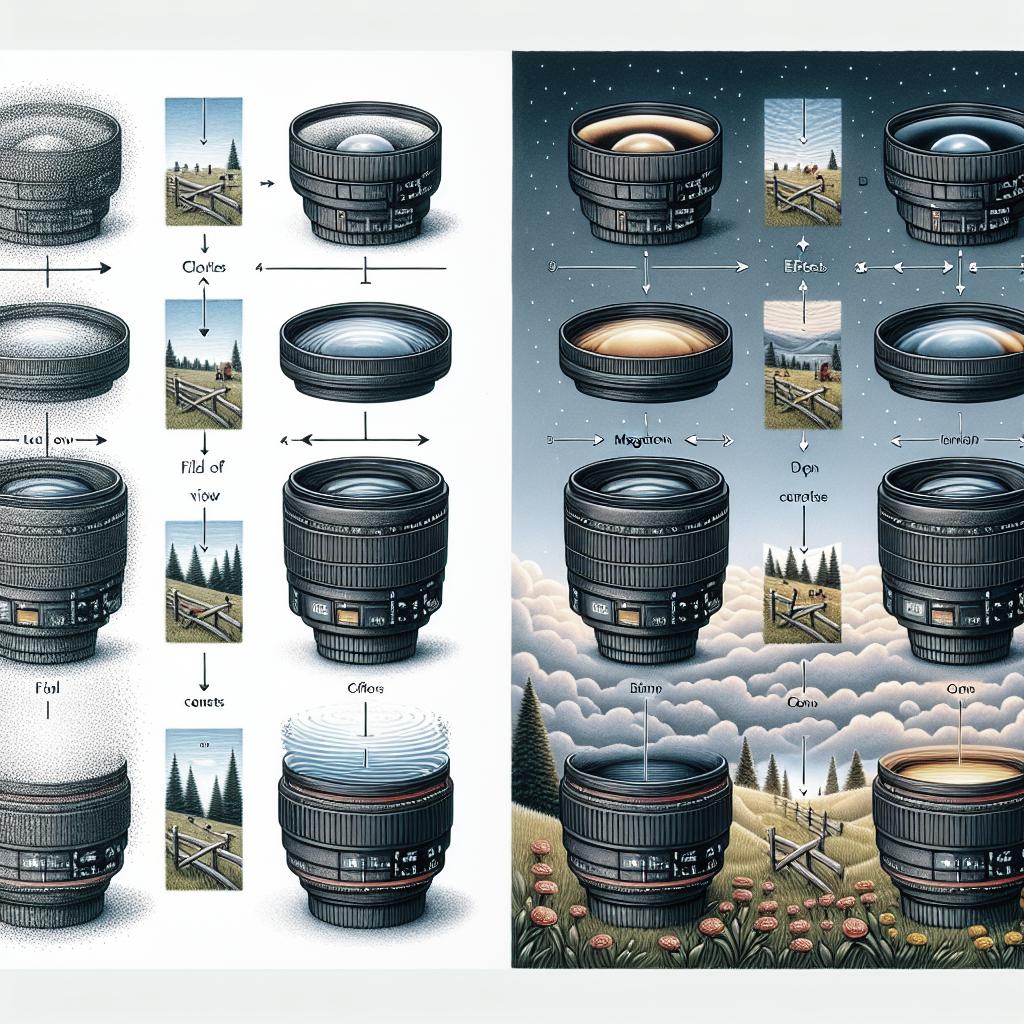
The field of view is fundamentally linked to the focal length. It determines the extent of the observable world captured through your lens. As focal length changes, so does the interplay of perspective, depth, and composition within the image.
Lenses with shorter focal lengths, often referred to as wide-angle lenses, provide a broader field of view. This makes them ideal for landscape, architecture, and interior photography. On the contrary, lenses with longer focal lengths yield a narrower field of view, which is often favored for portrait and wildlife photography, where subject isolation is key.
Distance Between Objects
Focal length significantly influences perceived distances between objects within your frame. Short focal lengths tend to exaggerate the distance between foreground and background elements, often making objects appear stretched or spread out.
In contrast, longer focal lengths compress the space between elements, leading to a more flattened appearance. This compression can be an artistic tool in itself, allowing photographers to creatively alter the perception of depth and proximity within the scene.
How to Use Focal Length
Short focal length
Short focal lengths, often under 35mm, are prized for their ability to capture expansive scenes. These lenses excel in situations where a comprehensive view is desired, such as in landscape photography. Despite potential distortion at the edges, they are preferred for maximizing visual context.
The use of short focal lengths also encourages creativity and experimentation in photography, pushing users to explore unconventional angles and positions for capturing the desired composition.
Standard focal length
Standard focal lengths, ranging from 35mm to 70mm, strike a balance between wide-angle and telephoto lenses. They resemble the perspective of the human eye, offering a natural look without the distortion associated with wide lenses or the compression of telephoto lenses.
These versatile lenses are ideal for everyday photography tasks, making them a staple for amateur and professional photographers alike. They are particularly suited for street, portrait, and casual event photography.
Long focal lengths
Long focal lengths exceed 70mm, offering increased magnification. This category includes telephoto and super telephoto lenses, essential for sports, wildlife, and any scenario where the subject is at a considerable distance.
Long focal lengths facilitate subject isolation due to their narrow depth of field. However, users must consider challenges such as camera shake and the need for rapid shutter speeds to ensure sharp images.
Sensor size
Sensor size plays a crucial role in interpreting focal length. A lens’s focal length remains constant across different cameras, but the crop factor of the sensor affects the perceived magnification and field of view.
Full-frame sensors preserve the intended field of view of a given focal length, whereas crop sensors effectively increase the perceived focal length, narrowing the field of view. Understanding this relationship is important when transitioning between different camera systems.
Focal Length Comparison in Lenses
Wide angle lens
Wide-angle lenses, typically ranging from 10mm to 35mm, are notable for their expansive field of view. These lenses are perfect for environments where space is limited but the breadth of the scene needs capturing.
While adept at storytelling and environmental portraits, these lenses may introduce distortion, especially toward the edges. Mastery of these characteristics can, however, transform distortion into a compelling compositional element.
Short focal length
Defined as focal lengths below 35mm, short focal length lenses are well-suited for capturing immersive landscapes and sweeping vistas. These lenses maintain a reasonable level of detail while offering a comprehensive view.
They are frequently used in conjunction with larger apertures to achieve desired artistic effects, expanding the possibilities of creativity in the composition.
Standard lens
Standard lenses, ranging from 35mm to 70mm, replicate the natural perspective seen by the human eye. They are versatile and capable of handling a broad spectrum of photography genres, from candid to portrait work.
Due to their balanced field of view and the absence of distortion, these lenses are indispensable tools for both amateurs refining their skills and seasoned photographers seeking quality reproductions.
Telephoto and Super Telephoto Lenses
Telephoto lenses, often beyond 70mm, offer narrow fields of view alongside substantial magnification. Their ability to bring distant subjects closer is essential for photographing wildlife, sporting events, and distant landscapes.
Super telephoto variants exceed 200mm, allowing for extreme close-ups from great distances. However, users must manage challenges like physical length and stabilization to maintain image quality.
Macro Lens
While not defined by focal length alone, macro lenses merit mention due to their specialized focus capabilities. They allow close-up photography at great levels of detail, making them invaluable for subjects such as flora, fauna, and intricate textures.
Focal lengths for macro lenses commonly range from 50mm to 200mm, allowing variable working distances based on subject size and accessibility, thereby providing exceptional flexibility.
Picking the Right Focal Length
Choosing the appropriate focal length depends largely on your photographic aims. Various genres and settings dictate the suitability of specific focal lengths for optimal results.
Understanding different focal lengths empowers photographers to select equipment that aligns with their subject matter, composition goals, and environmental factors.
Why is focal length important?
Angle of view
Focal length directly impacts the angle of view, shaping the observer’s visual experience of the photograph. This aspect of lens choice is central to determining the scope of the narrative within an image.
A nuanced understanding of how different focal lengths affect the angle of view allows photographers to craft images that effectively transmit their artistic vision and storytelling intentions.
Subject size
The ability to adjust focal length alters the apparent size of subjects within the frame, creating a dynamic way to influence visual emphasis. This malleability enhances the creative control photographers wield over their work.
Strategically choosing focal length based on subject size allows key elements to be highlighted or minimized, steering the viewer’s focus effectively throughout the image.
Compression
Long focal lengths compress the perceived distance between objects, a technique often employed to stack scenery or combine elements creatively. This compression can introduce new artistic interpretations to ordinary scenes.
When strategically applied, compression allows photographers to explore depth and scale uniquely, enhancing the context and storytelling within their composition.
Lens Focal Length vs Camera Focal Length
The interplay between lens focal length and camera system focal length can influence the overall visual outcome. Due consideration must be given to the camera’s sensor type (full-frame vs crop sensor) and resultant crop factor.
Acknowledging these relationships and adapting accordingly enables photographers to predict and manipulate their equipment’s output more accurately and adjust to diverse filming conditions.
Zoom vs Prime Lens
Deciding between zoom and prime lenses can be dictated by focal length flexibility and image quality requirements. Zoom lenses provide a range of focal lengths, making them versatile for varied shooting scenarios without switching lenses.
Prime lenses, however, offer singular focal lengths and often boast superior sharpness and aperture capabilities. The reduced complexity of their construction can lead to better performance, making them favorites for specific use cases where precision matters.
Suggested focal length based on type of photography
Portraits
For portrait photography, focal lengths ranging from 85mm to 135mm are commonly favored. They offer pleasing compression and subject isolation, making them ideal for bringing focus onto facial features.
These lenses facilitate soft background bokeh, enhancing subject prominence and contributing to flattering renderings of human expressions and features.
Street
Street photography thrives on spontaneity and context, often employing standard lenses (35mm to 50mm) to emulate the natural perspective. The unobtrusive nature of these lenses ensures authenticity in capturing candid moments.
Their versatility allows photographers to adapt quickly to changing scenes, keeping pace with the dynamic environment inherent to street culture.
Architecture
The unique challenges of architectural photography often call for wide-angle lenses, primarily within the 16mm to 35mm range. Their expansive field of view captures the grandeur and intricacy of structures and interiors.
With attention to distortion control, these lenses deliver dramatic compositions that highlight design details while maintaining clean, vertical lines.
Landscape
Landscapes demand a wide field of view to encompass the breathtaking expanse of the natural world. Wide-angle lenses, typically between 14mm and 35mm, capture vast scenery and expansive skies proficiently.
Their ability to present expansive contexts makes them an essential tool for conveying the beauty and majesty of landscapes, allowing viewers to appreciate nature’s vastness.
Wildlife and Sports
Wildlife and sports photography often necessitate telephoto lenses ranging from 200mm to 600mm. Their capacity to capture distant and fast-moving subjects is unparalleled, bringing vibrant action into focus.
Apart from enabling tight framing, these lenses assist photographers in preserving crucial details while maintaining a safe distance from wildlife or the high-energy environment of sports events.
Future Prospects
| Category | Description | Preferred Focal Length |
|---|---|---|
| Portraits | Ideal for highlighting facial features with pleasing compression. | 85mm – 135mm |
| Street | Spontaneous and contextual captures closely mirroring human vision. | 35mm – 50mm |
| Architecture | Captures the grand scale and detail of buildings and structures. | 16mm – 35mm |
| Landscape | Wide field of view to encompass expansive scenery. | 14mm – 35mm |
| Wildlife and Sports | Narrow field for distant and fast-action subjects. | 200mm – 600mm |
“`
