
“`html
Common Post-Processing Mistakes in Photography
The art of photography doesn’t end at clicking the shutter. Post-processing plays a pivotal role in achieving the desired results. However, it’s easy to fall into traps that can compromise the quality and authenticity of photos. This blog post highlights frequent errors made during post-processing and offers insights on how to avoid them. By examining areas such as excessive editing, neglecting to make localized adjustments, and not incorporating metadata, photographers can refine their craft. Incorporating small changes like straightening horizons and checking work meticulously can drastically improve the final output. This article aims to guide enthusiasts and professionals alike towards making more informed editing choices, enhancing both personal style and technical skill in the process.
About the contributor
This article brings together insights from Lucas Martin, a passionate journalism graduate with a strong inclination towards creative writing and new-age media. His experiences with local media and personal blog projects have afforded him a unique perspective on the nuances of digital content creation. Drawing from his deep interest in travel, technology, and visual storytelling, Martin shares key lessons on post-processing that resonate with both amateur and seasoned photographers.
His strong research abilities and grasp of evolving digital trends lend credibility to the observations presented here, making this article a useful resource for photographers looking to enhance their post-production skills. Lucas continually seeks to learn and educate others on achieving a balance between style and authenticity in photography. His keen eye for detail and ability to articulate ideas clearly make this guide a must-read for anyone passionate about photography.
Not getting it right in-camera
One of the foundational aspects of photography is capturing the best possible image directly from the camera. Unfortunately, many photographers rely heavily on post-processing to fix mistakes that could have been addressed while shooting. This reliance can lead to less attention being paid to important factors such as lighting, composition, and exposure at the time of capture. As a result, photographers might spend unnecessary time in post-production trying to amend issues that might not have arisen had more forethought been applied in-camera.
Furthermore, correcting significant mistakes in post-production can degrade the quality of images. Editing to fix poorly exposed photos, for instance, may result in increased noise and loss of detail. Therefore, mastering in-camera techniques ensures that the image’s foundation is solid and requires minimal touch-ups during processing. Cultivating this practice not only saves time but also enhances professional discipline and creativity.
Overdoing it
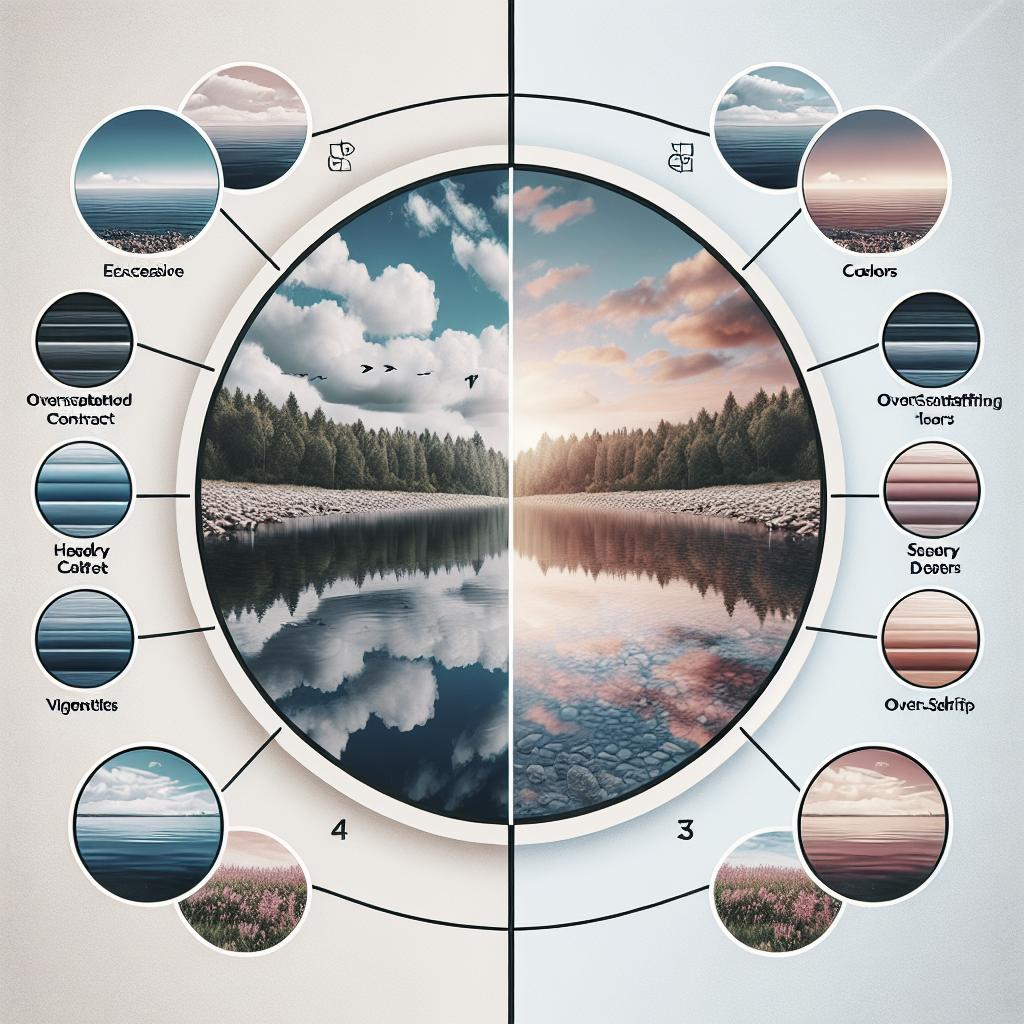
In the excitement of editing, photographers often fall into the trap of over-processing their images. This can manifest in exaggerated HDR effects, excessive sharpening, or overly saturated colors. While the goal might be to make an image “pop,” there’s a fine line between enhancing a picture and making it appear artificial. Overediting can strip away the natural beauty of a photograph and diminish its authenticity.
To prevent overdoing it, photographers should aim for subtlety and restraint in their edits. It’s useful to step away from the computer after making adjustments and return later with a fresh perspective. Sometimes, less is more; focusing on minor tweaks can often achieve a more impactful and aesthetically pleasing result. Regularly comparing edits with the original image can also serve as a reminder to preserve its inherent qualities.
Only making global adjustments
A critical yet common mistake in post-processing is making only global adjustments. While global edits affect the entire frame, they often fail to address the needs of specific areas within an image. Localized adjustments like dodging, burning, and selective sharpening can bring out details in ways global changes cannot achieve. By ignoring these techniques, photographers might miss opportunities to elevate focal points and create a stronger visual narrative.
Understanding how to use tools like masks and adjustment layers opens up a world of creative possibilities. These powerful tools allow for precise enhancements that can transform an image. Practicing localized editing techniques can help in maintaining balance and ensuring that each detail complements the overall composition without becoming overwhelming.
Not checking your work
One of the simplest yet often overlooked practices in post-processing is the final review of your work. Taking the time to closely inspect edits before considering an image complete is vital. Inadequate checking might lead to missed spots like sensor dust, unintentional color casts, or uneven edits that affect the image’s coherence and quality.
Establishing a routine that includes a thorough inspection of your work can dramatically improve the final output. Consider having a checklist to ensure all elements, from contrast to retouching, meet your quality standards. Additionally, getting a second opinion from fellow photographers can provide new insights and perspectives, making it a collaborative effort to refine your edit.
Blurring the skin
Skin retouching is a sensitive area in portrait photography. One of the prevailing mistakes is excessive skin blurring, which results in an unnatural, plastic-like appearance. While the intent is often to create a smooth, flawless complexion, overcorrection can strip away the texture that gives skin its lifelike quality. This not only detracts from the subject’s natural beauty but also risks losing the image’s emotional impact.
To avoid this pitfall, photographers should explore techniques like frequency separation or dodge and burn for more nuanced retouching. These methods allow for the refinement of skin while maintaining its natural texture and highlighting key features. Embracing subtlety in retouching preserves the authenticity and expression of the portrait.
Forgetting to straighten the horizon
A skewed horizon line can disrupt the balance and focal point of an image, especially in landscape photography. Oftentimes during post-processing, photographers might overlook this vital element, leading to an image that appears unintentional or imbalanced. Straightening the horizon is a simple adjustment that can remarkably enhance the composition’s impact and professionalism.
Regularly checking the horizon during editing becomes almost second nature with practice. Most processing software tools have easy-to-use guides or grid overlays to assist in this correction. Ensuring a level horizon helps in creating a more polished and visually appealing image that effectively captures the viewer’s attention.
Copying someone else’s style
There is nothing wrong with drawing inspiration from established photographers but aiming to replicate someone else’s style can hinder personal growth and creativity. During post-production, sticking too closely to another’s signature look stifles individuality and prevents photographers from developing their own unique style. Creativity flourishes through experimentation and the challenge of finding one’s own voice in visual storytelling.
To cultivate a personal style, photographers should focus on understanding the fundamentals of editing and actively seek to experiment with various techniques. Over time, this process leads to the discovery of preferences and styles that resonate with both the photographer’s vision and their audience. Embrace influences, but also take creative risks that reflect individual artistic journeys.
Editing only for web, not for print
Photographers often edit images with web display in mind, potentially ignoring the nuances necessary for print publication. The differences in color spaces, resolution, and sharpness mean that an image ready for the web may not translate well to print. Overlooking these aspects could result in prints that are disappointing in color accuracy and quality.
To prepare images for both formats, photographers should familiarize themselves with printing requirements and calibrate their monitors to ensure accurate color representation. Understanding the differences between sRGB and CMYK color spaces, as well as adjusting resolution and sharpness for print, can help maintain image integrity across different mediums.
Not adding metadata
Metadata serves as a digital fingerprint for images, providing essential details like copyright information, location, and camera settings. Neglecting to add metadata during post-processing can lead to issues of image misattribution and even lost recognition in digital archives. This oversight is not only technically negligent but also a missed opportunity for photographers to showcase their work more formally and professionally.
Incorporating metadata enhances an image’s presence and traceability across various platforms. Photographers should develop the habit of embedding metadata systematically, taking advantage of software to automate and ease this process. These details safeguard intellectual property and contribute to recognizing the originality and effort behind each photograph.
Forgetting to have fun
Amidst the technical challenges and artistic considerations in post-processing, one crucial element often forgotten is the joy of the process itself. Photography is as much about experimentation and personal satisfaction as it is about creating stunning visuals. Concentrating solely on the technicalities can sometimes turn the post-processing stage into a monotonous task rather than an inspiring journey.
Photographers should embrace the playful aspects of editing, using it as an opportunity to explore and express their creative instincts. Allowing room for spontaneity and joy in editing can lead to unexpected discoveries and innovations in style. By keeping the process fun and engaging, photographers not only enhance their skills but also preserve the passion that drives their craft.
Lessons learned
| Common Mistake | Key Takeaway |
|---|---|
| Not getting it right in-camera | Focus on perfecting in-camera techniques to minimize post-processing. |
| Overdoing it | Employ moderation and subtlety to maintain image authenticity. |
| Only making global adjustments | Use localized adjustments for more precise enhancement. |
| Not checking your work | Ensure quality with a thorough review and second opinions. |
| Blurring the skin | Retain natural texture with refined retouching techniques. |
| Forgetting to straighten the horizon | Maintain balance and professionalism by leveling the horizon. |
| Copying someone else’s style | Develop a unique voice through experimentation and learning. |
| Editing only for web, not for print | Adjust images for both digital and print formats. |
| Not adding metadata | Embed metadata to safeguard intellectual property and enhance image traceability. |
| Forgetting to have fun | Maintain a joyful and experimental approach to keep the process engaging and fulfilling. |
“`
